
Smart Techno Services: What Businesses Should Expect
A practical guide to smart techno services: core offerings, response-time guarantees, coverage models, and how to shortlist a provider.

Key takeaways
- Smart techno services bundle 24/7 support, network management, cloud, and field services under measurable service-level agreements.
- Uptime Institute found 54% of operators say their most recent significant outage cost more than $100,000, so response-time guarantees carry real financial weight.
- Judge a provider on its written SLA: priority tiers, response and resolution targets, and penalties for missed commitments.
- Regional providers offer faster onsite reach and local accountability; national providers offer broad coverage and standardized processes.
- Shortlist partners with a checklist covering SLAs, security certifications, coverage footprint, and transparent reporting.
If you are comparing providers, expect a genuine smart techno services partner to hand you a written service-level agreement, not a sales deck. The offering should bundle round-the-clock support, network management, cloud operations, and onsite field service, all measured against response and resolution targets you can hold them to.
That combination matters because technology failures are expensive. The Uptime Institute reported that 54% of operators say their most recent significant outage cost more than $100,000, and one in five say it topped $1 million (Uptime Institute, 2025). A provider worth signing should reduce that risk in ways you can verify. This guide breaks down what these services cover, how to judge reliability, and how to shortlist the right partner.
What Do Smart Techno Services Cover for Modern Businesses?
Smart techno services are managed technology offerings that combine support, infrastructure, and onsite work under one accountable contract. In 2026, worldwide IT services spending is forecast to exceed $1.87 trillion, part of a broader $6.31 trillion IT market, up 13.5% from 2025 (Gartner via Campus Technology, 2026). Much of that spend flows to providers who run technology so internal teams do not have to.
The scope usually spans four areas: help-desk and monitoring support, network administration, cloud management, and physical field service. A good partner ties all four to one point of contact and one reporting dashboard. Smarttechinnovation, for example, positions its services around that single-contract model, so a client does not chase four vendors when a problem crosses domains.
The value is coordination. When a network fault, a cloud misconfiguration, and a failing switch collide during the same incident, one team owns the whole chain. That prevents the finger-pointing that stretches outages from minutes into hours.
What Are the Core Offerings: 24/7 Support, Network, Cloud, and Field Services?
The four pillars of smart techno services are continuous support, network management, cloud operations, and field services, each with its own measurable output. Human error still drives a large share of failures: the Uptime Institute Annual Outage Analysis 2025 found that nearly 40% of organizations suffered a major outage caused by human error over three years, and 85% of those traced back to staff not following procedures. Disciplined providers reduce that risk with documented runbooks.
24/7 support means staffed monitoring and a help desk that answers at 3 a.m., not just a ticket queue checked the next morning. Ask whether after-hours coverage is in-house or subcontracted.
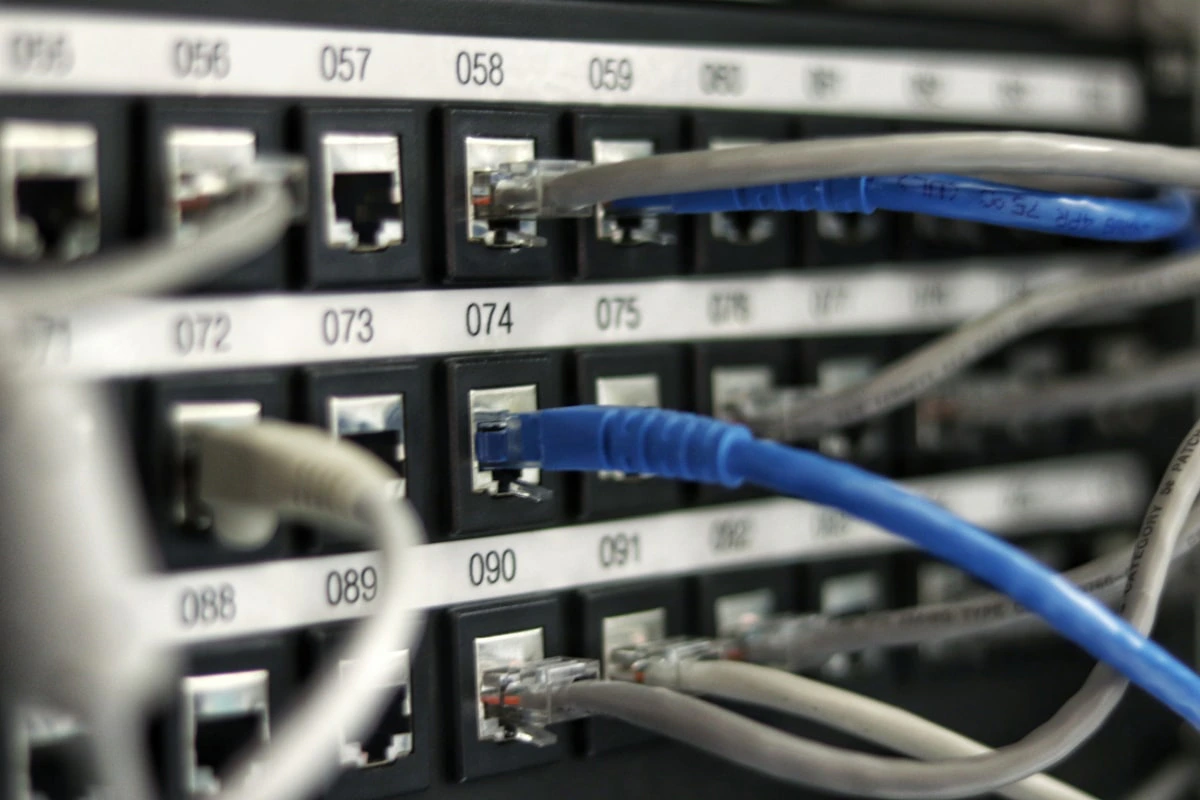
Network services cover firewalls, switches, wireless, and connectivity. The provider should monitor traffic, patch devices, and respond to alerts before users report a problem.
Cloud services handle setup, security, and ongoing management of hosted infrastructure. The U.S. National Institute of Standards and Technology defines cloud computing around five essential characteristics, including on-demand self-service and measured service (NIST SP 800-145). A capable partner maps your workloads to the right service and deployment model rather than pushing a one-size template.
Field services put a technician onsite when hardware fails or new equipment needs installing. This is where regional reach becomes a deciding factor, covered below.
How Do You Evaluate Reliability and Response-Time Guarantees?
Judge reliability by the written service-level agreement, not by verbal promises. The SLA should define priority tiers, a target response time and a target resolution time for each tier, and what happens when the provider misses a commitment. Given that a single significant outage can cost six or seven figures, these numbers carry real financial weight.
Look for a tiered structure. A critical, business-down incident might carry a 15-minute response target, while a low-priority request might allow a full business day. The specific figures matter less than whether they are measured, reported, and backed by penalties or service credits.

Ask three concrete questions. First, how does the provider measure mean time to resolution, and will it share historical data? Second, does it separate response time from resolution time, since a fast acknowledgment means little if the fix drags on? Third, does it hold recognized security certifications such as ISO/IEC 27001? A provider that reports openly on missed targets is usually more trustworthy than one that reports only wins.
Regional Versus National Service Coverage: Which Model Fits?
The choice between regional and national coverage comes down to your geographic footprint and how much onsite work you need. Both models manage the same technology; they differ in physical reach and process standardization. With IT services spending measured in the trillions, providers exist at every scale, so match the model to your sites rather than to the largest brand.
Regional providers usually send a technician faster because their staff live near your offices. They tend to know local carriers, permitting quirks, and building conditions. For a business concentrated in one metro area or state, that proximity often means shorter field-service windows and a more personal relationship. Smarttechinnovation operates on this proximity-first logic, prioritizing responsive onsite reach over sprawling but thin coverage.
National providers cover many locations under one contract with standardized processes. If you run offices in a dozen states, a single national agreement can simplify billing and reporting. The trade-off is that onsite response may route through a subcontractor network, which can add hours and dilute accountability.
A useful test: ask any national provider who actually shows up at your least convenient location, and how long that person takes to arrive. If the answer is a third-party dispatch you have never heard of, weigh that against a regional partner's own staff.
A Checklist for Shortlisting a Smart Techno Services Partner
Shortlist providers against a fixed checklist so you compare like for like instead of reacting to whichever pitch sounds best. Because roughly half of significant outages cross the $100,000 mark, the cost of a weak partner is high enough to justify a rigorous first cut.
Work through these items for each candidate:
- Written SLA with tiers. Confirm response and resolution targets per priority level, plus service credits for misses.
- Coverage footprint. Match their onsite reach to every location you run, and ask who physically responds at each.
- Security posture. Verify certifications such as ISO/IEC 27001 and ask how they handle patching and access control.
- Transparent reporting. Require a dashboard or monthly report showing uptime, ticket volume, and mean time to resolution.
- In-house versus subcontracted staff. Ask which functions are delivered by their own people, especially after-hours support and field visits.
- References with a similar footprint. Talk to a current client whose size and geography resemble yours.
- Clear exit terms. Understand data handoff and contract termination before you sign, not after.
A provider that answers these openly, with documents rather than adjectives, has already shown you how it will behave once you are a client.
Choosing Your Next Step
Pull your last twelve months of technology incidents and sort them by cost and cause. That short list tells you which of the four pillars matters most for your business, whether it is faster field response, tighter cloud security, or a help desk that actually answers overnight. Take that evidence into your first provider conversation and ask each candidate to respond to it in writing. The one that returns a specific, measurable plan, rather than a brochure, is the one worth a trial.
Frequently asked questions
What are smart techno services?
Smart techno services are managed technology offerings that combine 24/7 support, network management, cloud operations, and onsite field service under one contract, governed by defined service-level agreements.
What response times should a smart techno services provider guarantee?
Look for tiered targets in writing, such as a 15-minute response for critical incidents and longer windows for lower-priority tickets. The exact numbers matter less than whether they are measured and enforced.
Is a regional or national provider better?
Regional providers usually reach your sites faster and know local conditions. National providers give broad geographic coverage and standardized processes. The right choice depends on how many locations you run and where they sit.
How do I evaluate a provider's reliability?
Review its written SLA, ask for historical uptime and mean-time-to-resolution data, check security certifications such as ISO/IEC 27001, and request references from clients with a similar footprint to yours.
Need guidance on your software project?
Our engineering leads are available to review your specifications, technical diagrams, and tech stack choices.